Ever since I was two months old, I have been an avid camper. Okay, so maybe I wasn’t doing the planning, packing, setting up camp, building campfires, cooking, or hitching up the travel trailer, but I was there for every adventure my outdoor-enthusiastic family went on.
Sitting by the campfire is probably my favorite thing about camping. Whether it is the smell of fires burning in the fresh air at night in a beautiful Michigan campground, or the smell of the smoldering fires in the morning, my spirit is lifted.
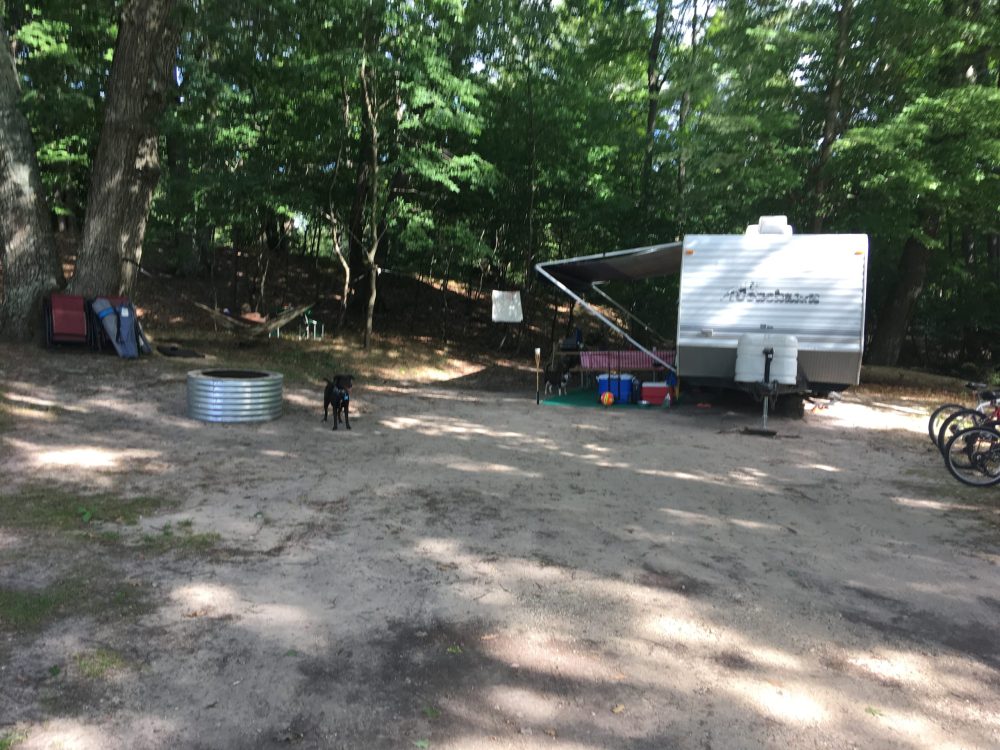
When I was about seventeen years old, I started tent camping with friends and my cousin at primitive campsites on Lake Michigan and the Au Sable River. Later, once I had children of my own, I began taking them camping as babies, continuing an important family tradition. We started in tents, and by the time my youngest was around a year old, we upgraded to an RV/travel trailer.
When my mom and I went camping, for most trips we went with my grandparents and my same-age cousin in a travel trailer towed by either a Chevy Suburban or a Ford Econoline conversion van.
The other times, my mom would pack all our gear into her AMC (American Motors Corporation) Gremlin and hit the road. We camped in a giant canvas tent, sleeping on click-click lounge chairs in our sleeping bags and cooking on an old Coleman stove.
Whether it was just my mom and I, the whole family, or when with my sons, we camped all across the state of Michigan at mostly State Parks, a select couple of private campgrounds, and on the Jersey Shore or in the Outer Banks (OBX), North Carolina, for two weeks out of the summer.
Below are some of my favorite State and National Parks to visit, located Up North in Michigan’s lower peninsula:
- Huron Manistee forest in Oscoda, on the Au Sable River
- Manistee National Forest, Manistee, footsteps from Lake Michigan
- Ludington State Park, on the shores of Lake Michigan
- Lakeport State Park, on the shores of Lake Huron
- Proud Lake State Park, on the Huron River (close to home)
- Seven Lakes State Park, for Halloween camping (close to home)
- Algonac State Park, on the shores of Lake Huron (great pier fishing)
- Burt Lake State Park, on Burt Lake (which connects to the Indian River, connecting to Mullet Lake, which feeds into the Cheboygan River, which leads to Lake Michigan)
- Mears State Park, on the shores of Lake Michigan, minutes away from the world-renowned Silver Lake Sand Dunes
- Outdoor Adventures campground, Standish, MI (private)
- Haas Lake campground, New Hudson, MI (private)
- Duggan’s Family campground, Port Austin (near Caseville), MI (private)
- Highland Recreation State Park, White Lake, MI
- Pontiac Lake State Park, White Lake, MI
When we camp in the Manistee National Forest, campsites are first-come, first-served. Basically, you drive down two-track roads (fire roads), find a clearing, and set up camp. But not at the Huron-Manistee National Forest off the Au Sable River, as you need to reserve those sites unless there are boat-to-only campsites vacant. However, when camping at a Michigan State Park, you must make a reservation.
Michigan State Park & Harbor Reservations shares, “Book your favorite spot! The Michigan state park and harbor reservations site helps you reserve a specific camping site, overnight lodging location, shelter or harbor slip.
By creating an online account, you can create, view, change or cancel your reservations. Reservation agents are also available to make your reservation or answer any questions you may have over the phone. Please call 1-800-447-2757 (1-800-44PARKS).
When the booking window opens, inventory becomes available Monday through Friday at 8 a.m. and Saturdays and Sundays at 9 a.m.
- Campsites, overnight lodging and harbor slips can be reserved 6 months in advance.
- Picnic shelters can be reserved 1 year in advance.
Harbor slips, campsites and state park lodging not already reserved in advance may be available on a first-come, first-served basis,”.
Because Pure Michigan’s travel and tourism season is very busy, especially in the summer months, the campgrounds are usually booked and full, leaving no campsites available on a first-come, first-served basis. If you get one, consider it your lucky day!
Tent camping with a dog
Before we had our two sons, we had our dogs, and they went everywhere with us – including, and especially, camping. They truly do love it, well, at least my dogs do! I remember when our first dogs, Roxy and Josi, were so pooped from primitive camping all day at the beach and body-surfing the waves of Lake Michigan that they clawed open our tent and put themselves to bed. The following year, we had a little tent for them and left the door open so they wouldn’t wreck our tent again.
When camping with dogs at a State Park, they must be on a leash no longer than six feet. It is challenging for many dogs, even after proper obedience training. Camping in State Parks can be distracting and over-stimulating because there are usually a lot of people coming and going, other dogs walking by, and endless new sights and smells to explore.
When we did primitive camping, we could let our furry loved ones be leash-free. I have taught every dog I have had to “stay home,” which means stay near me; wherever I am is home. That way, when we are chilling around the campsite or hiking in the woods, they get to be free dogs!
Different types of camping
There are many types of camping, including primitive or backcountry camping, camping in private campgrounds, resort campgrounds, state parks, national parks, camping in your car or van, in a tent or travel trailer/RV, overlanding, backpacking, and even the new type called glamping.
Dutch Ware Gear defines glamping as, “For those who enjoy nature but prefer to relax in comfortable spaces, glamping — glamorous camping — provides a reprieve from the outdoors during camping trips. You’ll stay in a cabin or another type of accommodation where you’ll have access to beds, electricity, and indoor bathrooms. This option is terrific for families who want to enjoy time together without the stress of setting up or tearing down tents,”.
Best campground in Michigan
In conclusion, Michigan’s best campground is the one that brings you peace, adventure, and connection—where campfires glow, memories deepen, and nature feels like home.