Tag: Pure Michigan

  • Michigan Sand Dunes ATV

    Michigan Sand Dunes ATV

    I have family who moved to North Carolina, adjusted to the southern way of life, and claim that they have better dunes than we have in Michigan. Ha! I beg to differ. Even though near their beach resort campground in the Outer Banks is Jockey’s Ridge State Park, with the tallest living sand dune system on the Atlantic coast, I do not think it’s better than what we have in Pure Michigan.

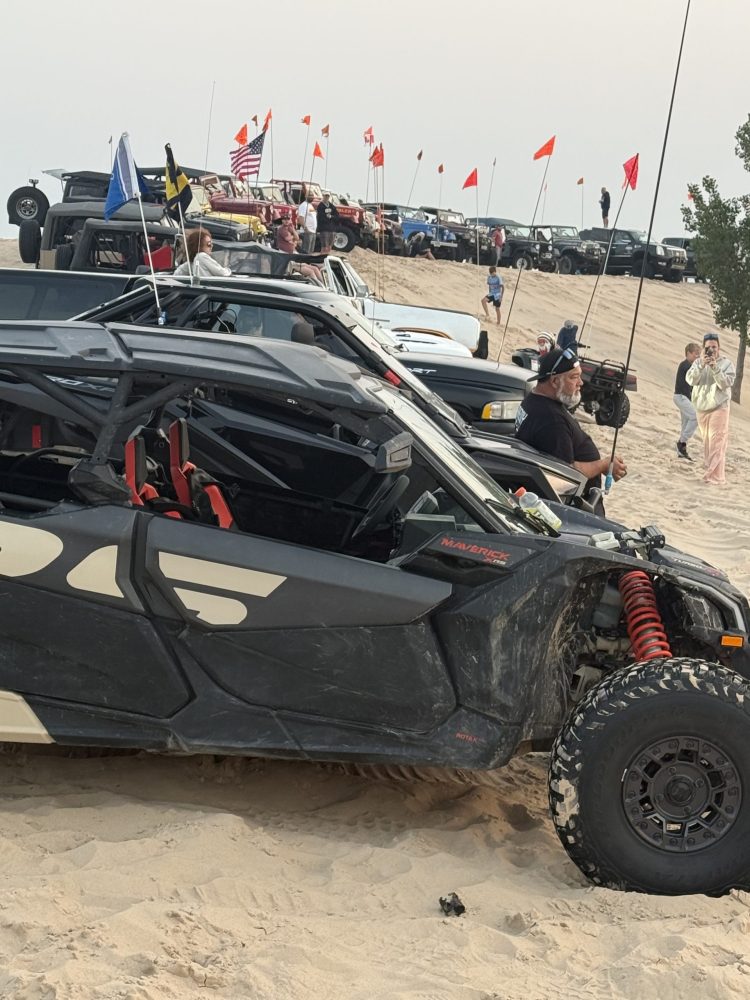
    For example, next week I am going on a camping trip with my sons to Mears State Park, located on the shores of Lake Michigan and hosts many miles of walking dune areas. Up the road, about fifteen minutes, are the infamous Silver Lake Sand Dunes where ATV’s or other off-road vehicles try to conquer the sandy mountains. Shoot, I have seen everyday vehicles attempt to climb the dunes (and fail!)

    Further up the coast, about an hour and forty-five minutes from Silver Lake are the pristine Sleeping Bear Dunes. In fact, there are dunes all along the west coast of Michigan!

    Michigan Sand Dunes, according to the travel folks at Lake Michigan Destinations, “Our beaches are the best in the Midwest…in the Nation…in the world! Well, at least we think so, and so does ABC’s Good Morning America. The Sleeping Bear Dunes National Lakeshore in Northwest Michigan was voted by the viewers of GMA as the most beautiful place in America.

    One of the spectacular sights at Sleeping Bear is the sand dunes that peak at over 400 feet. The largest dune system in the world associated with a freshwater lake is right here on Lake Michigan!

    • The Sand Dunes of Central West Michigan

    Silver Lake Sand Dunes

    • Southwest Michigan Dunes

    Saugatuck Dunes State Park

    Warren Dunes State Park

    • Northwest Michigan Sand Dunes

    Sleeping Bear Dunes National Lakeshore

    Ludington State Park & Hamlin Lake

    Nordhouse Dunes Wilderness Area

    Arcadia Dunes,”.

    In the Upper Peninsula, there is another set of dunes at the Grand Sable Banks and Dunes in Munising.

    On the east side of Michigan along the Au Sable River near Oscoda are large sand hills and dunes. I have had first-hand experience with these hills and dunes as we moved our annual camping trip over there after four years at Elberta Beach. When I was in my twenties, I could run up and down those dunes to swim with my dogs in the refreshing river waters. Yet, today, I wouldn’t even attempt it!

    The Outbound notes that, “Hike atop 200 foot sand dunes overlooking miles of protected forest in the beautiful AuSable River Valley.

    Lumberman’s Monument is truly a hidden gem. Most people don’t realize there are towering sand dunes in the Oscoda area. While the majority of visitors stay at the overlook, there is a breathtaking trail for the more adventurous.

    For the brave, run down a dune and take a dip in the pristine clear water. In the summertime, you might encounter a few other boaters having a party on the edges of the dunes. Just remember, the climb back up can be strenuous!

    After the last dune vista, the trail turns inland, and you can continue another 1.5 miles in the forest to Sawmill Point campground, if desired. If you make it to Sawmill Point, this is 2.8 miles from where you began,”.

    What is dune grass?

    No matter where we were camping – on the West Coast dunes or the East Coast river dunes, there was always that pesky dune grass to contend with!

    When my cousin and I were about twenty years old, we started an annual Fourth of July camping trip with our friends and other cousins (as they became of age), with the first year at Ludington State Park.

    When we, as a group of twenty-somethings, arrived at the campground around midnight, clinking and clanking as we set up our tents, the park manager came over to ask us to keep it down, as quiet hours were from 10 pm to 8 am.

    He said we probably wouldn’t enjoy camping there because it was more of a family-friendly campground, and he let us in on a local-only secret about a secluded spot down the road from there where we could camp on the beach.

    We took his suggestion and camped for free in tents on Elberta Beach in Frankfort, Michigan, on the shores of Lake Michigan. Albeit illegal camping, the campground manager told us that as long as we were respectful, took only pictures, and left only footprints, no one would give us a hard time for being there.

    We all enjoyed it very much, except for when we stepped on the dune grass. It hurts like a mutha when you step on it, as the plugs are pokie and hard! The following year, we brought a weed whip to trim down the dune grass.

    Before breaking out the weed whip, we ran into some forest rangers and asked if they minded if we cut down the dune grass. Good thing we asked first, because apparently it is a federal offense to do so, as the dune grass is protected!

    What is the purpose of dune grass?

    Thankfully, we did not cut any of that dune grass down on Elberta Beach or while camping in the Huron-Manistee National Forest along the Au Sable River, as there is a definite purpose for the dune grass.

    The State of Michigan’s official government website declares that, “The Great Lake coastlines have extensive coastal dunes on Lakes Michigan and Superior. In the 1980’s it became apparent that development pressures had potential to impact the future of Michigan’s dunes as they became increasingly popular sites for recreation and residential development. In 1989, approximately 74,000 acres of dunes along 265 miles of coastline were identified as needing protection from developmental pressures and designated as Critical Dunes.

    These Critical Dune Areas represent a diverse cross-section of dune shapes, height, and vegetation along Lake Michigan’s shoreline in the lower and upper peninsulas, and the shore of Lake Superior.

    The Critical Dune Areas (CDAs) include public lands and private properties where developmental, silvicultural, and recreational activities are regulated and a permit is required under Part 353, Sand Dunes Protection and Management, of the NREPA. The law balances the benefits of protecting, preserving, restoring and enhancing the diversity, quality, functions, and value of the critical dunes with the benefits of economic development, multiple uses, and public access,”.

    Michigan sand dunes ATV

    In conclusion, Michigan’s dunes are more than gorgeous playgrounds—they’re living landscapes worth exploring, respecting, and protecting so future generations can enjoy them too.
  • Pop Up Camper Bedding

    Pop Up Camper Bedding

    With the recent Canadian wildfire smoke blanketing Michigan, I was contemplating the possibility of needing to cancel our camping trip. These wildfires have been so destructive for Canadian residents because they are experiencing a terrible outbreak in the Boreal Forests.

    Wildlife has caused people to be evacuated, businesses have closed, land has been lost for First Nations peoples, and the conditions are not looking well for any of the surrounding areas for hundreds, if not thousands, of miles away. If the least of my worries is potentially canceling my camping trip, I should be so fortunate, as my neighbors to the North are not so lucky at this moment.

    Two days before our trip, high winds and rain pushed the thick plumes of wildfire smoke out of most of the southern portion of our Lower Peninsula, although the Upper Peninsula is still unfortunately covered.

    We continued on to the West side of Michigan for our Girls’ Camping trip in Holland, at Holland State Park within the Lake Macatawa Modern Campground section. Here are my main points from our little getaway:

    • The campground was awesome, clean, and there were a lot of friendly fellow campers
    • Lake Michigan and beach time did not disappoint as usual
    • The bathrooms and bath houses were clean
    • Good firewood choices
    • Campfires were relaxing
    • The company was stupendous
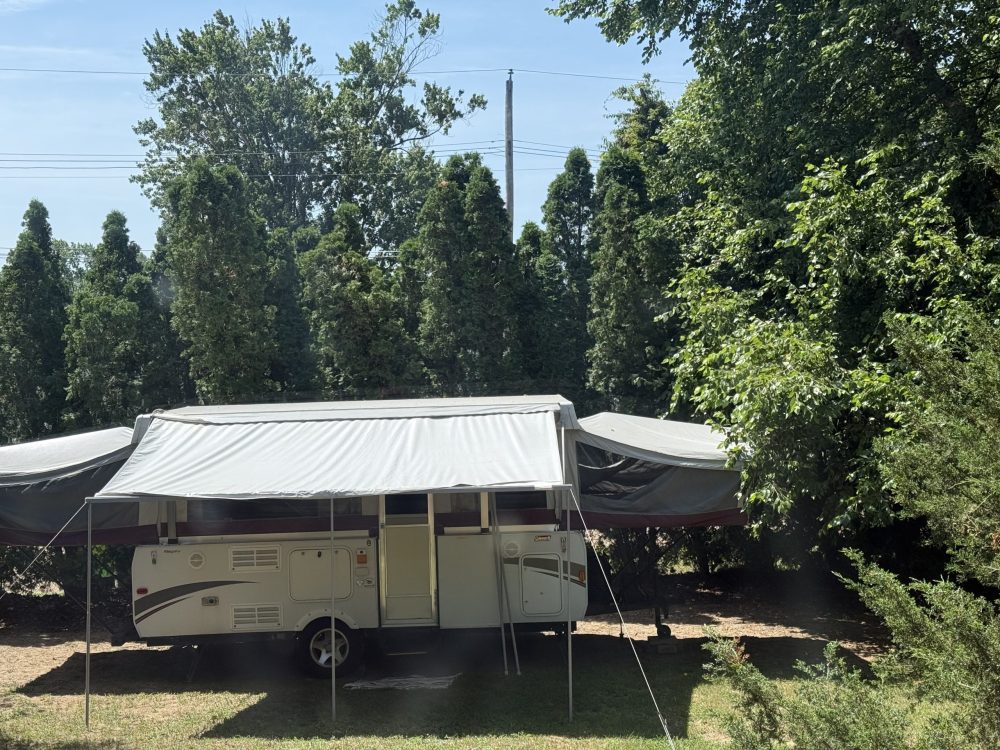
    • Crossover vehicle towed my new-to-me popup very well

    However, all three of us women slept like crap! Before I go on the next camping trip, I will be looking into improving the comfort of the bed for sure.

    According to The Southern Glamper, “Sometimes you just want to be in your own bed. Other times, you want to be camping. And many times, campers complain about the usually uncomfortable RV mattress.

    • Replace Your Mattress

    In our pop up camper, we have a Classic Brands Memory Foam Replacement Mattress. It is about 4.5 inches thick. I can still close my camper up with no issues. 

    And if you are still thinking, ‘I’ll just buy a topper instead and save the money.’ Don’t. Get the mattress. 2 and 3-inch toppers are over $100. Our mattress is thicker than a topper and costs almost the same.

    • Padding Underneath

    Dense memory foam cushions your body against that hard, board underneath. But, anti-fatigue mats under your mattress can take your bedding to the next level.

    • Bedding

    Get some soft sheets. These don’t have to be expensive,”.

    Upon further research, I found that to prevent trapped condensation under the foam mattress, I should consider perforated anti-fatigue rubber drainage mats rather than traditional anti-fatigue mats.

    So, I followed this lady’s suggestions and bought anti-fatigue mats to place down first, on the hard plywood in the camper’s pull-out beds. However, I bought anti-fatigue mats with holes to prevent condensation from building up between the wood, the mats, and the memory foam bed.

    Furthermore, I ended up going with the three-inch memory foam topper instead of the mattress to avoid any complications in closing down my camper. I already have soft, thick sleeping bags that I will take off before closing it up.  

    Why does my tent get so much condensation?

    While a popup camper does have a hard top, bottom, and lower side walls, the “wings” that pull out for beds and the top side walls are made of canvas. Moisture forms when warm air meets the cold canvas in a popup camper, just as it does in tents. I’m not talking about whether there are holes or leaks; this happens even when everything is in perfect condition.

    Camping experts at Alton Goods explain this phenomenon: “Yep, condensation is one of the most common complaints people have about camping.

    And rightly so – you expect your shelter to keep you dry, so the idea that it’s getting wet inside just seems wrong.

    And while there are methods to reduce condensation, the truth is that in some conditions, it’s unavoidable. It’s not user error or poor shelter design. It’s just a fact of life.

    In the most simple terms, condensation is the process of water vapour in the air turning into liquid.

    When it comes to tents, tarps and swags, condensation occurs because the air inside the shelter is warmer than the air outside the shelter. Warm air can hold more moisture than cold air, so as the air temperature cools, the excess moisture condenses into water droplets.

    The main source of this warm, moist air inside your tent is you. Every breath you take releases water vapour, and your body’s natural heat and perspiration contributes to the temperature difference and higher humidity inside the tent,”.

    Condensation is unavoidable, but I have found a few tricks over the years to minimize its effects.

    1. Open windows during the day
    2. Close windows around 6:30-7 pm before the night air changes

    It’s not a foolproof method, but it helps (sometimes)!

    How to back up a camper trailer

    A popup camper might have similarities to tents, but you don’t have to tow a tent – you pack it in with your gear. A popup camper must be towed by a vehicle that can handle the weight.

    I have towed a small popup and a boat before, but I’ve never had to do the maneuvering or backing up because I had my ex-husband or another friend who knew what to do. With patience and practice, I am doing okay so far.

    Here are some pointers I found on the web for backing up a travel trailer:

    1. Grip the Bottom of the Wheel: Place your hand at the 6 o’clock position. Moving your hand to the left pushes the trailer left; moving it to the right pushes it right.
    2. Watch the Wheels: Focus your mirrors on the trailer’s tires, not the back of the trailer.
    3. Use a Spotter: Establish clear, agreed-upon hand signals or use walkie-talkies to communicate.

    It turned out to not be as bad as I imagined, and I did well towing the camper with my crossover vehicle and “with a little help from my friends”. However, once we got to our campsite, it took multiple attempts to back it up and a lot of effort to get the camper into the right spot, taking about forty-five minutes in total.

    We actually never did get it completely level, as the campsite was very uneven and I was done trying to get it in the right spot. Would not recommend it, but we survived. The camper did not tip over, and all went well besides the uncomfortable beds.

    The second trip next month with my sons will be less stressful, as my oldest son is very comfortable towing, maneuvering, and backing up with a trailer. Plus, it will be my second time doing it, so hopefully the nervous jitters will be gone, and my fears will be conquered.

    The first trip was only about two to three hours away, and the second trip is about four to five hours away.

    *Note: All content within this article is meant for informational purposes only and is in no way a replacement for professional advice or support. Seek immediate and appropriate assistance from a professional when necessary.

    Pop up camper bedding

    In conclusion, camping comfort comes with trial, error, and preparation—but better bedding, less condensation, and practice towing can make each trip more enjoyable.

  • Best Campground in Michigan

    Best Campground in Michigan

    Ever since I was two months old, I have been an avid camper. Okay, so maybe I wasn’t doing the planning, packing, setting up camp, building campfires, cooking, or hitching up the travel trailer, but I was there for every adventure my outdoor-enthusiastic family went on.

    Sitting by the campfire is probably my favorite thing about camping. Whether it is the smell of fires burning in the fresh air at night in a beautiful Michigan campground, or the smell of the smoldering fires in the morning, my spirit is lifted.

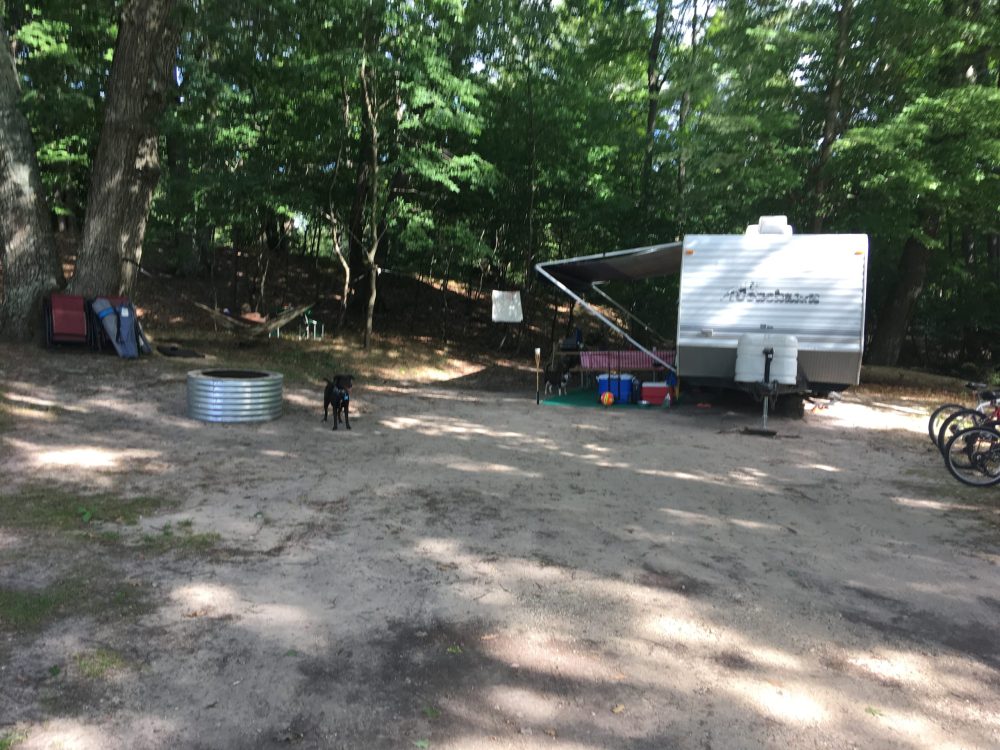
    When I was about seventeen years old, I started tent camping with friends and my cousin at primitive campsites on Lake Michigan and the Au Sable River. Later, once I had children of my own, I began taking them camping as babies, continuing an important family tradition. We started in tents, and by the time my youngest was around a year old, we upgraded to an RV/travel trailer.

    When my mom and I went camping, for most trips we went with my grandparents and my same-age cousin in a travel trailer towed by either a Chevy Suburban or a Ford Econoline conversion van.

    The other times, my mom would pack all our gear into her AMC (American Motors Corporation) Gremlin and hit the road. We camped in a giant canvas tent, sleeping on click-click lounge chairs in our sleeping bags and cooking on an old Coleman stove.

    Whether it was just my mom and I, the whole family, or when with my sons, we camped all across the state of Michigan at mostly State Parks, a select couple of private campgrounds, and on the Jersey Shore or in the Outer Banks (OBX), North Carolina, for two weeks out of the summer.

    Below are some of my favorite State and National Parks to visit, located Up North in Michigan’s lower peninsula:

    • Huron Manistee forest in Oscoda, on the Au Sable River
    • Manistee National Forest, Manistee, footsteps from Lake Michigan
    • Ludington State Park, on the shores of Lake Michigan
    • Lakeport State Park, on the shores of Lake Huron
    • Proud Lake State Park, on the Huron River (close to home)
    • Seven Lakes State Park, for Halloween camping (close to home)
    • Algonac State Park, on the shores of Lake Huron (great pier fishing)
    • Burt Lake State Park, on Burt Lake (which connects to the Indian River, connecting to Mullet Lake, which feeds into the Cheboygan River, which leads to Lake Michigan)
    • Mears State Park, on the shores of Lake Michigan, minutes away from the world-renowned Silver Lake Sand Dunes
    • Outdoor Adventures campground, Standish, MI (private)
    • Haas Lake campground, New Hudson, MI (private)
    • Duggan’s Family campground, Port Austin (near Caseville), MI (private)
    • Highland Recreation State Park, White Lake, MI
    • Pontiac Lake State Park, White Lake, MI

    When we camp in the Manistee National Forest, campsites are first-come, first-served. Basically, you drive down two-track roads (fire roads), find a clearing, and set up camp. But not at the Huron-Manistee National Forest off the Au Sable River, as you need to reserve those sites unless there are boat-to-only campsites vacant. However, when camping at a Michigan State Park, you must make a reservation.

    Michigan State Park & Harbor Reservations shares, “Book your favorite spot! The Michigan state park and harbor reservations site helps you reserve a specific camping site, overnight lodging location, shelter or harbor slip.

    By creating an online account, you can create, view, change or cancel your reservations. Reservation agents are also available to make your reservation or answer any questions you may have over the phone. Please call 1-800-447-2757 (1-800-44PARKS).

    When the booking window opens, inventory becomes available Monday through Friday at 8 a.m. and Saturdays and Sundays at 9 a.m.

    • Campsites, overnight lodging and harbor slips can be reserved 6 months in advance.
    • Picnic shelters can be reserved 1 year in advance.

    Harbor slips, campsites and state park lodging not already reserved in advance may be available on a first-come, first-served basis,”.

    Because Pure Michigan’s travel and tourism season is very busy, especially in the summer months, the campgrounds are usually booked and full, leaving no campsites available on a first-come, first-served basis. If you get one, consider it your lucky day!

    Tent camping with a dog

    Before we had our two sons, we had our dogs, and they went everywhere with us – including, and especially, camping. They truly do love it, well, at least my dogs do! I remember when our first dogs, Roxy and Josi, were so pooped from primitive camping all day at the beach and body-surfing the waves of Lake Michigan that they clawed open our tent and put themselves to bed. The following year, we had a little tent for them and left the door open so they wouldn’t wreck our tent again.

    When camping with dogs at a State Park, they must be on a leash no longer than six feet. It is challenging for many dogs, even after proper obedience training. Camping in State Parks can be distracting and over-stimulating because there are usually a lot of people coming and going, other dogs walking by, and endless new sights and smells to explore.

    When we did primitive camping, we could let our furry loved ones be leash-free. I have taught every dog I have had to “stay home,” which means stay near me; wherever I am is home. That way, when we are chilling around the campsite or hiking in the woods, they get to be free dogs!

    Different types of camping

    There are many types of camping, including primitive or backcountry camping, camping in private campgrounds, resort campgrounds, state parks, national parks, camping in your car or van, in a tent or travel trailer/RV, overlanding, backpacking, and even the new type called glamping.

    Dutch Ware Gear defines glamping as, “For those who enjoy nature but prefer to relax in comfortable spaces, glamping — glamorous camping — provides a reprieve from the outdoors during camping trips. You’ll stay in a cabin or another type of accommodation where you’ll have access to beds, electricity, and indoor bathrooms. This option is terrific for families who want to enjoy time together without the stress of setting up or tearing down tents,”.

    Best campground in Michigan

    In conclusion, Michigan’s best campground is the one that brings you peace, adventure, and connection—where campfires glow, memories deepen, and nature feels like home.

  • What States Have All 4 Major Sports Teams

    What States Have All 4 Major Sports Teams

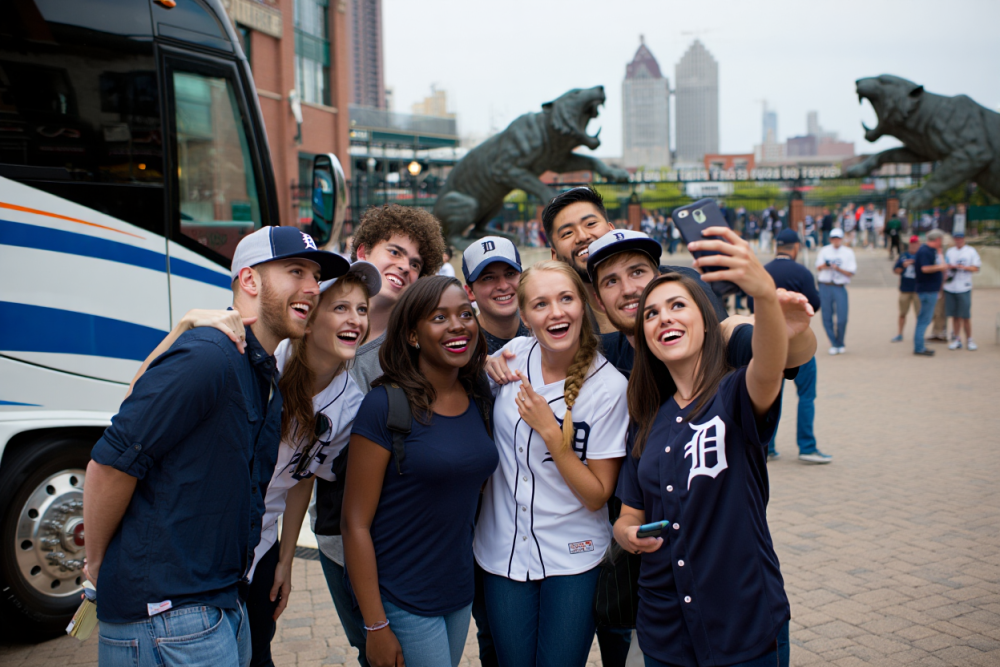
    Hailing from Michigan, I cannot fathom living in a state without a single professional sports team. For goodness’ sake, we are known as “Hockey Town”! We love our pro sports teams as well as our college teams.

    Furthermore, we have highly competitive sports teams, whether we are talking about notable pro teams or college teams, including but not limited to the following:

    • University of Michigan Wolverines (softball, basketball, hockey, football)
    • Michigan State University Spartans
    • Detroit Tigers Baseball
    • Detroit Red Wings Hockey
    • Detroit Pistons Basketball
    • Detroit Lions Football

    Besides Michigan, here are the other states that host all four major sports teams:

    1. New York
    2. California
    3. Florida
    4. Pennsylvania
    5. Minnesota
    6. Texas
    7. Illinois
    8. Colorado
    9. Ohio
    10. Arizona
    11. Massachusetts

    I can remember when New York had three baseball teams: the Yankees, Dodgers, and Mets. The Dodgers went to Los Angeles, California. Cali now boasts five professional baseball teams with the Dodgers, Angels, Athletics, Padres, and Giants.

    Florida has two with the Marlins and the Rays. Chicago has had the same two teams, which divide the state of Illinois’ loyalty among Cubs and White Sox fans. Ohio also has two teams, the Cincinnati Reds and the Cleveland Guardians.

    Missouri has two teams with the Kansas City Royals and the St. Louis Cardinals. Pennsylvania has the Philadelphia Phillies and the Pittsburgh Pirates. Lastly, Texas has two teams as well, including the Houston Astros and the Texas Rangers.

    I’m always surprised that we don’t have more than one pro team per sport, given that our great Pure Michigan state has two parts: the Lower Peninsula (The Mitten) and the Upper Peninsula (UP). Apparently, a lot of “Youpers” (people who live in the UP) are Wisconsin pro team fans – traitors!

    Wikipedia notes the following regarding Michigan sports teams and that, “Michigan is home to four major-league professional sports teams, all of which play in the Detroit metropolitan area. The Pistons played at Detroit’s Cobo Arena until 1978 and at the Pontiac Silverdome until 1988, when they moved into the Palace of Auburn Hills where they played for 28 years between 1988 and 2017, before moving back inside city limits to Little Caesars Arena in Detroit in 2017.

    The Detroit Lions played at Tiger Stadium in Detroit until 1974, then moved to the Pontiac Silverdome where they played for 27 years between 1975 and 2002, before moving to Ford Field in Detroit in 2002. The Detroit Tigers played at Tiger Stadium (formerly known as Navin Field and Briggs Stadium) from 1912 to 1999. In 2000 they moved to Comerica Park. The Red Wings played at Olympia Stadium until 1979, Joe Louis Arena from 1979 to 2017, and then to Little Caesars Arena beginning in 2017,”.

    We also have “feeder teams” that our pro teams recruit from. Key teams include:

    • Toledo Mud Hens (Triple-A) for Major League Baseball (MLB)
    • Erie SeaWolves (Double-A) for the MLB
    • Grand Rapids Griffins (AHL) for the Red Wings hockey organization
    • Motor City Cruise (NBA G League) for the Pistons basketball team

    Let’s not forget about soccer/futbol! Visit Detroit shares, “Are you a soccer fan (or football as the rest of the world knows it)? If so, check out Detroit’s own professional soccer club: Detroit City Football Club.

    Currently, Detroit City FC is in the USL Championship, which is the tier below major league soccer. There are both men’s and women’s teams, and last year the men’s Le Rouge team made it to the USL Championship playoffs.

    Catch a home game at Keyworth Stadium in Hamtramck the next time you’re in Detroit,”.

    Top 10 states with the most professional sports teams

    Well, I am going to guess that California leads in this category as well. For instance, as a football fan, I know that they have the following NFL teams:

    • L.A. Rams
    • L.A. Chargers
    • San Francisco 49ers

    They also used to have the Oakland Raiders, but they moved to Las Vegas in 2020.

    According to Sporcle, below are the top states with the most professional sports teams:

    1. California (15)

    MLB: Los Angeles Angels, Los Angeles Dodgers, Oakland Athletics, San Diego Padres, San Francisco Giants

    NBA: Los Angeles Lakers, Los Angeles Clippers, Golden State Warriors, Sacramento Kings

    NFL: Los Angeles Chargers, Los Angeles Rams, San Francisco 49ers

    NHL: Anaheim Ducks, Los Angeles Kings, San Jose Sharks

    2. Florida (9)

    MLB: Miami Marlins, Tampa Bay Rays

    NBA: Miami Heat, Orlando Magic

    NFL: Jacksonville Jaguars, Miami Dolphins, Tampa Bay Buccaneers

    NHL: Florida Panthers, Tampa Bay Lightning

    3. New York (8)*

    MLB: New York Mets, New York Yankees

    NBA: Brooklyn Nets, New York Knicks

    NFL: Buffalo Bills

    NHL: Buffalo Sabres, New York Islanders, New York Rangers

    *Both the New York Giants and the New York Jets play their home games in New Jersey. They have not been included in this total. When included, New York has 10 professional sports teams, and would be 2nd on this list.

    4. Texas (8)

    MLB: Houston Astros, Texas Rangers

    NBA: Dallas Mavericks, Houston Rockets, San Antonio Spurs

    NFL: Dallas Cowboys, Houston Texans

    NHL: Dallas Stars

    5. Pennsylvania (7)

    MLB: Philadelphia Phillies, Pittsburgh Pirates

    NBA: Philadelphia 76ers

    NFL: Philadelphia Eagles, Pittsburgh Steelers

    NHL: Philadelphia Flyers, Pittsburgh Penguins

    6. Ohio (6)

    MLB: Cincinnati Reds, Cleveland Guardians

    NBA: Cleveland Cavaliers

    NFL: Cincinnati Bengals, Cleveland Browns

    NHL: Columbus Blue Jackets

    7. Illinois (5)

    MLB: Chicago Cubs, Chicago White Sox

    NBA: Chicago Bulls

    NFL: Chicago Bears

    NHL: Chicago Blackhawks,”.

    States without professional sports teams

    Believe it or not, there isn’t a single United States professional sports team in Alaska – not even hockey! States like Alaska and Hawaii do not have professional sports teams because of their location proximity to the rest of the forty-eight states, and travel would be extremely costly for their home teams as well as the visiting teams.

    Other reasons these states lack professional sports team representation could be a small population or rugged, uninhabitable terrain. Other states without sports teams include:

    • Alabama
    • Arkansas
    • Connecticut
    • Delaware
    • Hawaii
    • Idaho
    • Iowa
    • Kansas
    • Kentucky
    • Maine
    • Mississippi
    • Montana
    • Nebraska
    • New Hampshire
    • New Mexico
    • North Dakota
    • Rhode Island
    • South Carolina
    • South Dakota
    • Vermont
    • Virginia
    • West Virginia
    • Wyoming

    What states have all 4 major sports teams

    In conclusion, from powerhouse states like California and New York to those without a single franchise, professional sports continue to unite fans and define regional pride nationwide.

    GO BLUE!

    Go get ‘em, Tigers!

    One Pride!

    Dee-troit Basketball!

    Let’s Go Red Wings (clap, clap, clap-clap-clap)!

  • What Are the Best Natural Lakes in Michigan?

    What Are the Best Natural Lakes in Michigan?

    After twenty-five years of living in the beautiful Lakes Area of northwest Oakland County, Michigan, I finally had the opportunity and the gift of exploring a nearby part of the Huron River that I have had my eye on for more than ten years.

    Over a decade ago, I was taking my oldest son to middle school, driving down a dirt road I normally didn’t go down because he was running late, and it was a shortcut to his school. Traveling down this dirt road, I noticed an inlet to an opening of the Huron River that appeared to be a good spot to drop in with kayaks. The view was picturesque and looked like a scene out of some travel advertisement for somewhere Up North.

    The area of this section of the Huron River was so beautiful and breathtaking that it became a mission for me to explore. The problem was that I did not have a kayak or canoe, but we did have a fish and ski boat that we took out on our lake – the largest private lake in our township.

    Our lake is wonderful for boating and fishing, but it’s very difficult to kayak on, as there are so many boats that create large wakes – for which I have no desire to battle. Furthermore, I choose not to run the risk of water damage or loss to Michigan’s best natural lake in Oakland County. Well, at least it’s my favorite natural lake!

    Although I am obviously partial to the waterways where I live (nicknamed the Lakes Area for good reason), according to the State’s official travel and tourism website, Pure Michigan, they chose the following as the best natural inland lakes in Michigan:

    1. “Lake Michigamme – This lake, 40 miles west of Marquette in Michigamme
    2. Big Manistique Lake – Curtis
    3. Lake Charlevoix (Charlevoix, Boyne City and East Jordan)
    4. Lake Leelanau – Leland and Cedar
    5. Torch Lake (Elk Rapids, Alden and Bellaire)
    6. Higgins Lake – Roscommon 
    7. Black Lake – Cheboygan and Presque Isle Counties
    8. Lake St. Clair – Mount Clemens
    9. Pontiac Lake – Waterford
    10. Gull Lake – Augusta
    11. Kalamazoo Lake – Saugatuck and Douglas
    12. Silver Lake – Mears
    13. Reeds Lake – Grand Rapids
    14. Muskegon Lake – Muskegon,”.

    At least one of our Lakes Area lakes made the list: Pontiac Lake. Also, one of my favorite lakes Up North: Silver Lake. We will be vacationing on Silver Lake in Mears in a couple of weeks, and I am very much looking forward to it!

    What are the hidden gem lakes in Michigan?

    Yesterday, I finally took advantage of the opportunity to drop my kayak in at the Huron River inlet I discovered on the nearby dirt road near my home. Thankfully, I now have two kayaks, so I invited a friend to join me on this exploration.

    It was everything I imagined and then some. Kayaking in this area of the Huron River was fairly easy-going, with beautiful scenery and a hidden gem of a lake. You can only get to this gem of a lake by way of the river or from the larger, private, adjacent lake.

    It was quiet, clear, clean, and teeming with large fish. However, because we were in kayaks, we did not get to swim in this little gem, as I couldn’t get out of my kayak without dumping everything in it, let alone get back into it from deep water.

    We paddled on to the larger lake, where we encountered some neighbor friends who invited us to climb aboard their pontoon. We spent a few hours there swimming, drinking plenty of water, and snacking.

    As a lifelong camper, scout, scout leader, and boater, I ventured out for the day prepared. We had the following in my cooler on an ice pack:

    • Two large bottles of water
    • Three sparkling waters
    • Carrot sticks
    • Hummus with cayenne pepper
    • Sweet and spicy rice crackers
    • Wine cheese chunks
    • My iPhone was in a waterproof case (water splashed up onto the back of my kayak while we were shored up, soaking the cooler and my shoes, but thankfully, because it was in a case, it did not get water damage)
    • Swiss army knife
    • Drink cozies
    • Napkins

    A Healthier Michigan reports these, “5 Lesser-Known Michigan Lakes Perfect for Summertime Fun:

    1. Spider Lake – Traverse City
    2. Big Star Lake – Baldwin
    3. Lac La Belle Lake – Keweenaw County
    4. Crystal Lake – Benzie County
    5. Higgins Lake – Roscommon,”.

    Can you swim in Silver Lake, Michigan?

    Earlier, I mentioned that we are taking a trip Up North to Silver Lake. I am beyond grateful to take a one-week summer vacation to stay at a cabin near Silver Lake and the infamous Silver Lake Sand Dunes. My adult son has a Jeep that we will ride on the dunes with, and we will play on Silver Lake with his twenty-foot fish and ski boat.

    The boat is not large enough to take out on the Great Lake, so we will spend a couple of days on the beach at Lake Michigan and enjoy the stunning sunsets in the evening. My younger cousin is coming up from North Carolina to join us as well, and we will make unforgettable memories to cherish for a lifetime for sure.

    The State of Michigan’s official government website has this to say about Silver Lake State Park where you can swim in both Silver Lake and Lake Michigan, “Silver Lake State Park is home to nearly 3 miles of Lake Michigan shoreline, 2,000 acres of sand dunes, a modern campground, a day-use area, a boating access site and the popular 450-acre Silver Lake ORV Area and more.

    Little Sable Point Lighthouse provides opportunities to climb the 100-foot tower, an experience facilitated by the Sable Points Lighthouse Keepers Association. Mac Wood’s Dune Rides operates an interpretive, 40-minute dune tour in the summer months, and special fat-tire bicycling and horseback riding seasons take place in the winter months.

    Silver Lake ORV Area is home to 450 acres of dunes open to ORV riding adventures! The scramble area – the only motorized sand dune riding opportunity east of the Mississippi River – where you can ride ATVs or UTVs, rent one locally or embark on a guided tour. Before you hit the dunes, be sure to familiarize yourself with the park’s parking voucher system, specific rules and safety tips,”.

    What are the best natural lakes in Michigan?

    In conclusion, exploring Michigan’s natural lakes offers unforgettable experiences, from kayaking to hidden gems and vacationing on picturesque shores, embracing the beauty and adventure these lakes provide creates lasting memories to share with friends and family alike.