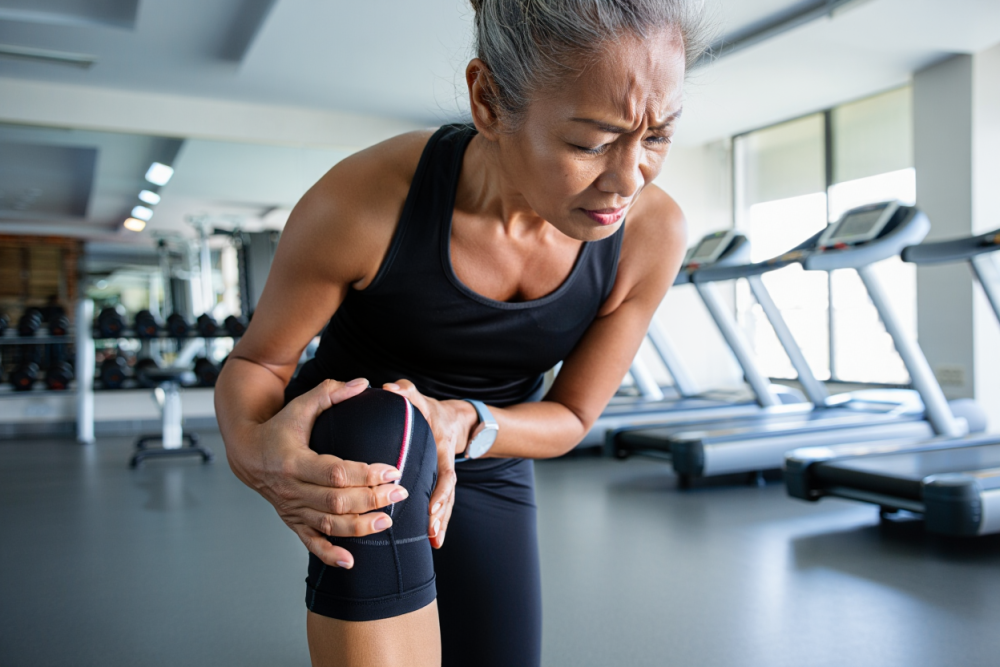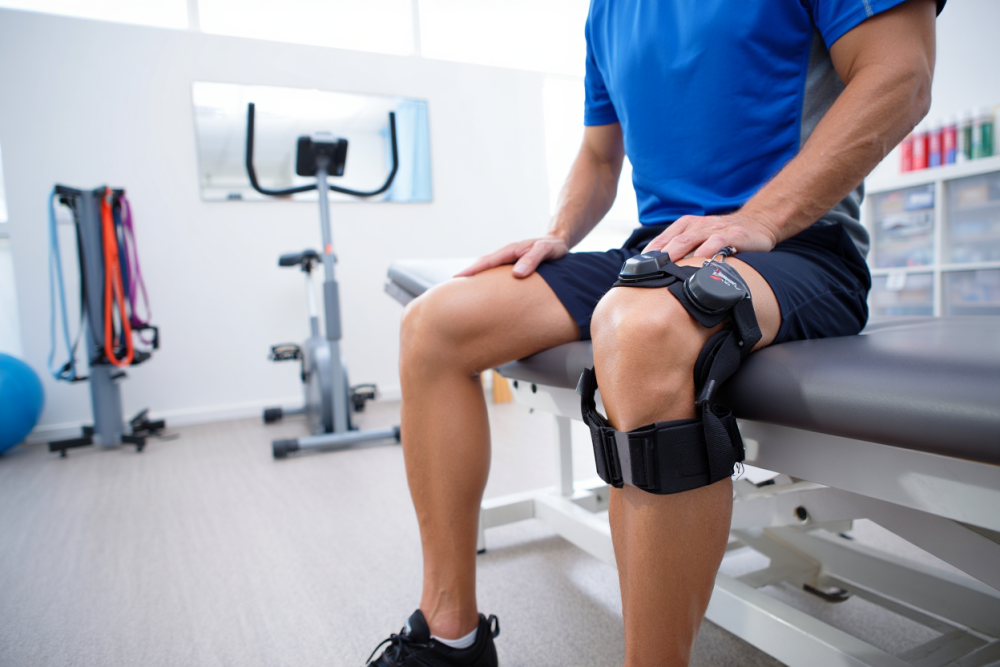
As a lifelong athlete and person who enjoys leading an active lifestyle, the fact that I have two torn meniscuses, one in my right knee and the other in my left knee, is not only debilitating but also discouraging because it has severely limited what I can and cannot do on a daily basis.
In fact, since I am also in the throes of menopause and am suffering from sleep apnea as a side effect of my extreme hormonal changes, I keep gaining weight because I am unable to do any impactful cardio workouts, and my body is in a storing mode with the lack of quality sleep.
Even though I make sure to go to the gym three times a week using a knee exercise machine and low-impact weightlifting routines, my efforts seem futile. I know that is not necessarily true, as I am strength training and moving, not sedentary, but I do feel disappointed, nonetheless.
Fortunately, I do not need a total knee replacement. For the moment, I am getting by with cortisone injections and am on a wait list for gel injections. Eventually, I will have to have surgery to repair the tears, but replacement probably won’t happen for another twenty years or so.
If I were to get a knee replacement, below are the potential recovery devices I would need, depending on the severity, to include, but not limited to the following:
- Walker
- Crutches
- Cane
- Grab bars
- Proper railings on staircases
- Raised toilet seat
- Shower chair
- Tub bench
- Non-Slip bathmat
- Reacher/grabber
- Sock aid
- Long-handled shoehorn
- Elastic shoe laces or slip-on tennis shoes
- Dressing stick
- Long-handled sponge or brush
- Cold therapy machine
- Compression stockings
- Knee slider (helps with knee bending or straightening in bed under the covers)
- Yoga strap (helps with recovery exercises)
- Foam roller
- Bed tray (to eat or work on)
- Post-op clothing specific to recovering knees
- Dressing supplies for wound care
According to the experts of knee recovery devices at X10 Therapy, “Why is X10 so Special for Knee Surgery Recovery?
It allows you to avoid PT-induced therapeutic pain.
The program is patient-centric. On X10 the patient is in control in contrast to manual physical therapy where the therapist is in control. So the X10 causes no pain while manual physical therapy can be extremely painful.
X10 patients get more physical therapy than with any other method (they use it more because it doesn’t hurt).
The X10 machine restores range of motion so quickly that patients rarely require follow-up procedures for scar tissue (Manipulation Under Anesthesia, MUA, or surgery to remove scar tissue).
X10 patients who use the machine for strengthening before and after surgery eliminate the typical strength deficit of 30% in approximately three weeks; at the end of one month they have more strength than they did before surgery.
The X10 restores patient independence in days or a few weeks as opposed to months to years.
Wirelessly the X10 communicates your progress to your surgeon, therapist and coach daily.
The X10 is particularly beneficial for patients who have other health problems as these patients are often prone to complications,”.
*Note: All content within this article is meant for informational purposes only and is in no way a replacement for professional medical or psychological advice or support. Seek immediate and appropriate care from a healthcare professional should you or a trusted loved one deem it necessary.
What causes a meniscus tear
As mentioned earlier, I have led an active lifestyle and am an athlete in many sports. Some of the sports and positions I have played since I was eight years old until I was in my late forties, as well as activities I participate in, include:
- Softball – shortstop, third baseman, left field, and center fielder (forty years)
- Track and Field – Two-mile relay anchor, fifty-yard and one-hundred-yard hurdles
- Volleyball
- Swimming
- Backyard football (no pads-tackle with the boys when I was a young girl!)
- Martial Arts
- BMX bike riding
- ATV trail riding
- Hiking
- Primitive camping
- Sledding
- Ice skating
- Roller Skating
- Boating and tubing
- Snow skiing
Out of all of these sports and activities, playing shortstop in fastpitch softball is probably where I have done the most damage to my knees. Potentially hundreds of times each game, a shortstop must pivot often, go from standing still to a full-on sprint, perform sudden stops and turns, and slam down on their knees frequently to keep the ball in the infield. When I was on the high school varsity team as a starting shortstop, I used to have water on my knees regularly and would ice and get cortisone shots often.
Sure, running the hurdles wasn’t the best on my knees either, but I did not participate in track and field for as long as I played softball. The hurdles did cause my ankles to get weak, though! Of course, my knees also took a hit with volleyball dives, BMX bike jumps, and ATV trail riding over the whoop-de-doos.
Let’s see what the professionals have to report on what causes a meniscus tear.
The Mayo Clinic suggests the below causes and risk factors, “Causes: A torn meniscus can result from any activity that causes you to forcefully twist or rotate your knee, such as aggressive pivoting or sudden stops and turns. Even kneeling, deep squatting or lifting something heavy can sometimes lead to a torn meniscus.
In older adults, degenerative changes of the knee can contribute to a torn meniscus with little or no trauma.
Risk factors: Performing activities that involve aggressive twisting and pivoting of the knee puts you at risk of a torn meniscus. The risk is particularly high for athletes — especially those who participate in contact sports, such as football, or activities that involve pivoting, such as tennis or basketball.
Wear and tear on your knees as you age increases the risk of a torn meniscus. So does obesity,”.
Yep, I am middle-aged and a bit overweight because I cannot do the cardio necessary to lose the weight as a direct result of my knee injuries. Double-edged sword syndrome – ugg!
What is the best treatment for a torn meniscus?
Obviously, avoiding the activities that created the problem in the first place would be my first line of defense in treating a torn meniscus. I also went through a few rounds of physical therapy, received acupuncture treatments, cortisone shots, and have iced as well as rested. Sports rubs and lotions have also been helpful.
An all-over-body therapy that I do nightly is to sit in my jetted bathtub for fifteen minutes. Then I turn the jets off and dump Epsom salt and essential oils into my bath to soak for another twenty minutes while I do my prayers and meditation to fully relax before bed.
Knee replacement recovery devices
In conclusion, understanding recovery tools and treatment options empowers us to stay active, protect our knees, and confidently navigate whatever healing path the future may bring.