Tag: injuries

  • Best Walking Shoes for Senior Women

    Best Walking Shoes for Senior Women

    Dating back at least twenty-five years, I started wearing shoes that provided the best support for my aching feet after waiting tables all day. Although I am no longer a server, I still seek out shoes designed for shock absorption, such as running shoes, insole supports, and footwear recommended by podiatrists. Currently, I am wearing New Balance, but I am considering switching to Hoka’s as they are what my older cousin, who is a nurse at an elder care facility in Michigan, wears.

    Furthermore, supportive footwear is essential, especially when standing on hard surfaces like concrete. Shoes with proper arch support and cushioning are making a huge difference for me. Shoes specifically designed for people who stand for long periods are built to reduce pressure on the joints and provide better shock absorption, especially as we age.

    My cousin and I are no longer spring chickens, and from what I can tell, we are not getting any younger!

    In addition to footwear, my doctors have recommended physical therapy sessions, which have helped strengthen the muscles supporting my feet, legs, and lower back, thereby creating a more stable foundation and reducing compensatory movements that have led to pain, most notably in my knees, as well as in those areas. Exercises that focus on stretching and strengthening the hip flexors, quadriceps, hamstrings, and calves also improve overall alignment and reduce joint stress.

    Let’s not forget about ergonomics! I have been using anti-fatigue mats to mitigate some of the harsh impacts of standing on my tile floors in the kitchen and on the concrete floor in my laundry room for years. However, I do not have an outdoor anti-fatigue mat yet, but I will be investing in one as soon as possible.

    The mats do offer a softer surface that reduces the strain on my body, but the pain is still there, just not as intense. In fact, I just ordered some new mats for my kitchen that are supposed to be more durable for my dogs. Their nails have scratched up the current set and are chipping.

    By maintaining an open dialogue with my healthcare providers throughout my injury and pain challenges, the pain management plans have reflected any changes in my conditions as well as incorporated new strategies and treatments as needed. Effective communication about symptoms and treatments will better inform the decisions I make, enhancing the management of chronic pain big time.

    *Note: All content within this article is meant for informational purposes only and is in no way a replacement for professional medical or psychological advice or support. Seek immediate and appropriate care from a healthcare professional should you or a trusted loved one deem it necessary.

    Why does standing on concrete hurt?

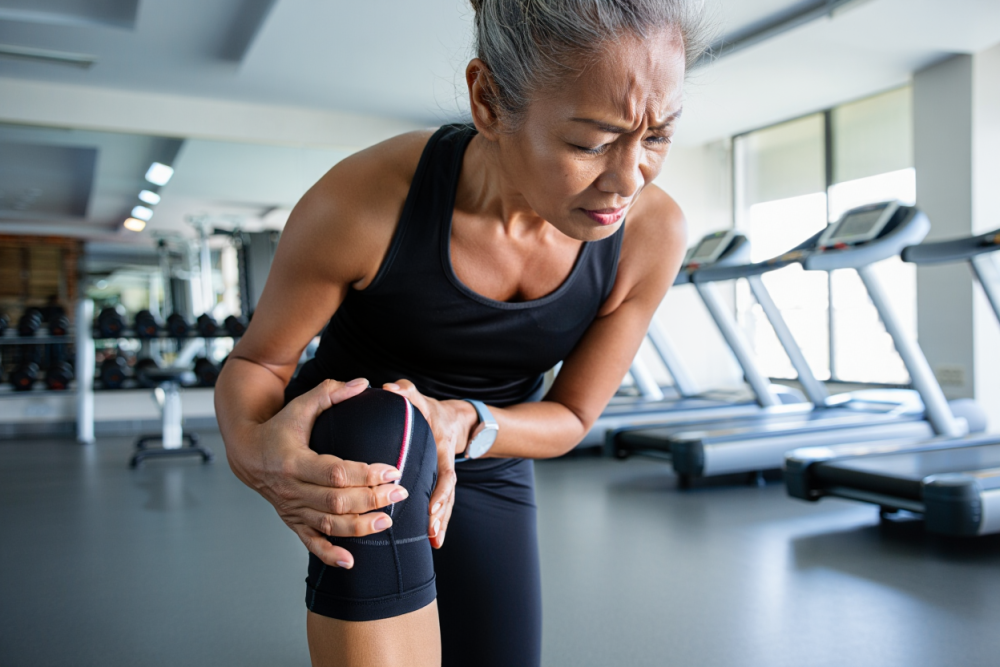
    While standing on concrete and my stone driveway for about thirty-five minutes or so, and after grilling dinner for my family, I can barely walk or stand on my left leg because of intense pain in my hip. There is severe pain in my knee as well. None of this is very odd to me, except that I have had somewhat of a period of respite from five-plus years of chronic pain. Chronic pain that has been, at some point, debilitating in the following areas:                                                 

    • Left shoulder
    • Right shoulder
    • Left hip
    • Lower left back sciatica
    • Lower right back sciatica
    • Torn meniscus on left knee
    • Torn meniscus on the right knee
    • Old neck injury

    The reason why standing on concrete hurts my back, knees, and hips is that, unlike other surfaces, concrete has no give, and its inflexibility affects the body, especially for middle-aged women like me, who often feel as though they have no shock absorbers left when standing on hard surfaces.

    For example, when standing on hard surfaces, I am notably susceptible to backaches, knee pain, swollen legs, and sore feet. Because this specific pain has not been treated yet, I experience a flare-up of old injuries and suffer from chronic pain.

    Some of my best pain relief techniques involve soaking in an Epsom salt bath for at least twenty-five minutes, once a day. It makes a huge difference for me. Throughout all the years I have been in sports recovery, I have employed the following:

    • Chiropractors
    • Orthopedics
    • Physical therapists
    • Acupuncturists
    • Massage therapists
    • Cortisone shots
    • Taking it easy
    • Sports rubs
    • Epsom salt baths

    As you can see, I have tried just about everything short of getting surgery, and unfortunately, it looks like I will end up needing knee surgery after all. But now I am wondering where this recent pain is coming from. Is it coming from my hip, or is it something in my feet? Let’s find out more below.

    Link between feet and back pain

    Because all the treatments and efforts to relieve my chronic pain have not completely eradicated it, I am now wondering if the pain is coming from my feet. Well, I can tell you that every source I have researched said yes, the bunion on my foot can most definitely cause hip, back, and knee pain.

    According to podiatrists at Kew Foot Clinic, “They (bunions) are however more than just a cosmetic problem. They can become a major medical problem for several reasons. The main problem is:

    Having a distorted big toe joint along with this joint becoming rigid in its range of motion changes how a foot pivots through propulsion. When a foot can no longer pivot at this joint it reduces knee and hip flexion causing stress on these joints.

    A bunion deformity can also change the alignment of the knee and hip causing excessive internal or external knee rotation leading to scoliosis of the spine,”.

    My healthcare team told me that if I suspect my feet might be the culprit, it would be wise to consult a podiatrist for a thorough evaluation. Custom orthotics might also be beneficial, as they can provide the support needed to correct your gait and distribute weight more evenly, potentially alleviating some of the strain on my knees, hips, and back.

    Best walking shoes for senior women

    In conclusion, supportive shoes, smart ergonomics, and open communication with healthcare providers can make all the difference—your feet truly are the foundation of whole-body wellness.

  • How to Determine if Its Muscle or Bone Pain

    How to Determine if Its Muscle or Bone Pain

    For many people, it is sometimes difficult to distinguish between bone and muscle pain as they usually affect similar areas of the body and have similar degrees of intensity. In general, pain in bones will feel sharper, deeper, and more debilitating than muscle pain.

    Initially, the best suggested course of action would be to schedule an appointment with a health care professional first before determining what type of “pain” you are experiencing and thus deciding on what therapy will best suit the needs of the injury.  

    The health care pros that might choose to go through a “Movement Science” program are prepared for the work as well as the many challenges facing patients with chronic pain in either the muscles, bones or nerves. Academic preparation in this field provides a foundation for a wide range of careers in fields including, but not limited to, exercise physiologists, personal trainers, fitness managers, worksite wellness coordinators, physical therapists, physical therapist assistants, athletic trainers, and group exercise instructors. A good program will meet the needs of both students seeking career training programs leading to an industry-accepted credentials/certificates (for physical therapy assistants) and those seeking to transfer to a four-year institution (for physical therapy or orthopedics).

    The American Academy of Orthopedic Surgeons reports findings that the most common causes of fractures are: 

    Osteoporosis is a “porous bones” disease that is more common in older adults, with causes that include hyperthyroidism, menopause, cancer treatment with anticancer drugs or radiation, and a family history of osteoporosis. However, it is not necessarily painful unless and until a collapsed vertebra or a fracture occurs.

    Most do not show symptoms, so watch out for early signs of:

    • Severe pain in the back
    • Height loss
    • Hunched or stooped posture
    • Bone injury caused by bruising or minor falls

    Trauma that results from a motor vehicle accident, a sports injury, or a hard fall.

    Bone stress also termed a stress fracture is caused by over usage of a muscle.

    Symptoms of fractures:

    • Intense sharp pain at site of injury
    • Inability to move injured area
    • Bruised
    • Deformity 

    Difference between bone pain and nerve pain

    There is not a direct test that will be able to tell what the difference is between muscle, skeletal, or nerve pain. Health pros such as physical therapists have ways to decipher the difference during an assigned exercise or activity.  

    Nerve – burning or stinging sensation that could be isolated or spread to other parts of the body during activity and is usually accompanied by a loss of strength, coordination, or sensation.

    Skeletal – pain usually occurs while doing weight bearing activities, sudden movements, or sustained inactivity and can be sharp, dull, pressure, or throbbing. If it is a fracture, pain is typically sharp, while it may be dull and achy should it be a bruise on the bone.  Pain could be caused by disorders of bones, joints, muscles, tendons, ligaments, bursae, or a combination.

    Muscle – sharp, tear or pulling sensation which occurs throughout the range of motion or during the transition from inactivity to activity. Muscle trauma usually results in impaired function, weakness, instability, or loss of coordination.

    Muscle injuries are most common in athletes or those involved in high demand sporting activities. However, they could happen as a direct result from a fall, or an external force such as a tackle or a vehicle accident. 

    Muscle injury symptoms:

    1. Stinging pain that may become duller over time
    2. Soreness
    3. Swelling or inflammation
    4. Redness
    5. Impaired movement at site of injury

    Muscle injuries are usually determined by physical exam and may require imaging tests such as an ultrasound or an MRI. Treatment involves cold or heat therapy, physical therapy, exercise, and light stretches (if tolerable), as well as over-the-counter pain relievers and plenty of rest.

    Fibromyalgia is a type of muscle pain that causes widespread intense pain across the body, affecting sleep habits, which could and does cause mental as well as emotional distress.

    Tendon and ligament pain is often less intense than bone pain and is worse when the affected tendon or ligament is stretched or moved, usually relieved by rest. 

    Bursae pain can be caused by trauma, overuse, gout, or infection. Bursae are small fluid-filled sacs that provide a protective cushion around joints. Usually, pain is worse with movement involving the bursa and is relieved by rest. 

    Joint pain (called arthralgia) may or may not be related to joint inflammation (called arthritis). Arthritis may cause swelling as well as pain. A wide variety of disorders can cause arthritis, including inflammatory arthritis (such as rheumatoid arthritis), osteoarthritis, infectious arthritis, gout and related disorders, autoimmune disorders and vasculitis disorders, osteonecrosis , and injuries affecting the part of a bone inside a joint. 

    Arthritic pain can be new (acute, for example, when caused by infections, injuries, or gout), or longstanding (chronic, for example, when caused by rheumatoid arthritis or osteoarthritis). Pain resulting from arthritis is typically worse when the joint is moved but usually is present even when the joint is not being moved. Sometimes pain originating in structures near the joint, such as ligaments, tendons, and bursae, seems to be coming from the joint.

    Some musculoskeletal disorders cause pain by compressing nerves. These conditions include the tunnel syndromes (for example, carpal tunnel syndrome, cubital tunnel syndrome, and tarsal tunnel syndrome). The pain tends to radiate along the path supplied by the nerve and may be burning. It is usually accompanied by tingling, numbness, or both.

    Sometimes, pain that seems to be musculoskeletal is caused by a disorder in another organ system. For example, shoulder pain may be caused by a disorder affecting the lungs, spleen, or gallbladder. Back pain may be caused by a kidney stone, abdominal aortic aneurysm, inflammation of the pancreas, or, in women, pelvic disorders. Arm pain may be caused by a heart attack (myocardial infarction).

    Again, please remember to always consult a physician or health care provider before determining your source of pain or course of action.