With the recent Canadian wildfire smoke blanketing Michigan, I was contemplating the possibility of needing to cancel our camping trip. These wildfires have been so destructive for Canadian residents because they are experiencing a terrible outbreak in the Boreal Forests.
Wildlife has caused people to be evacuated, businesses have closed, land has been lost for First Nations peoples, and the conditions are not looking well for any of the surrounding areas for hundreds, if not thousands, of miles away. If the least of my worries is potentially canceling my camping trip, I should be so fortunate, as my neighbors to the North are not so lucky at this moment.
Two days before our trip, high winds and rain pushed the thick plumes of wildfire smoke out of most of the southern portion of our Lower Peninsula, although the Upper Peninsula is still unfortunately covered.
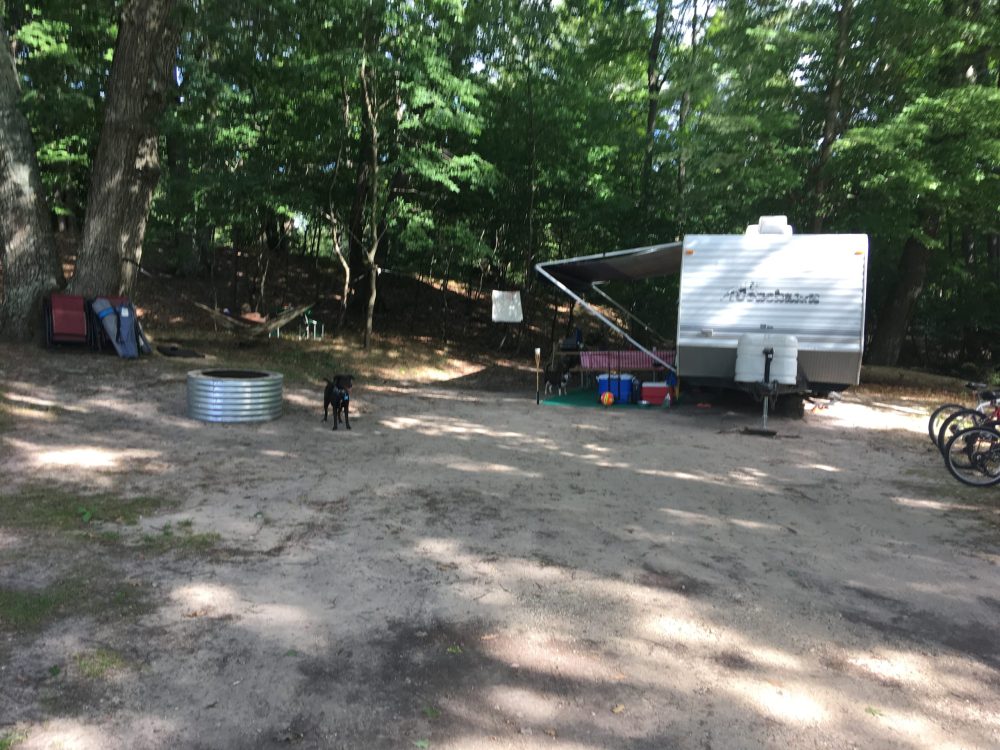
We continued on to the West side of Michigan for our Girls’ Camping trip in Holland, at Holland State Park within the Lake Macatawa Modern Campground section. Here are my main points from our little getaway:
- The campground was awesome, clean, and there were a lot of friendly fellow campers
- Lake Michigan and beach time did not disappoint as usual
- The bathrooms and bath houses were clean
- Good firewood choices
- Campfires were relaxing
- The company was stupendous
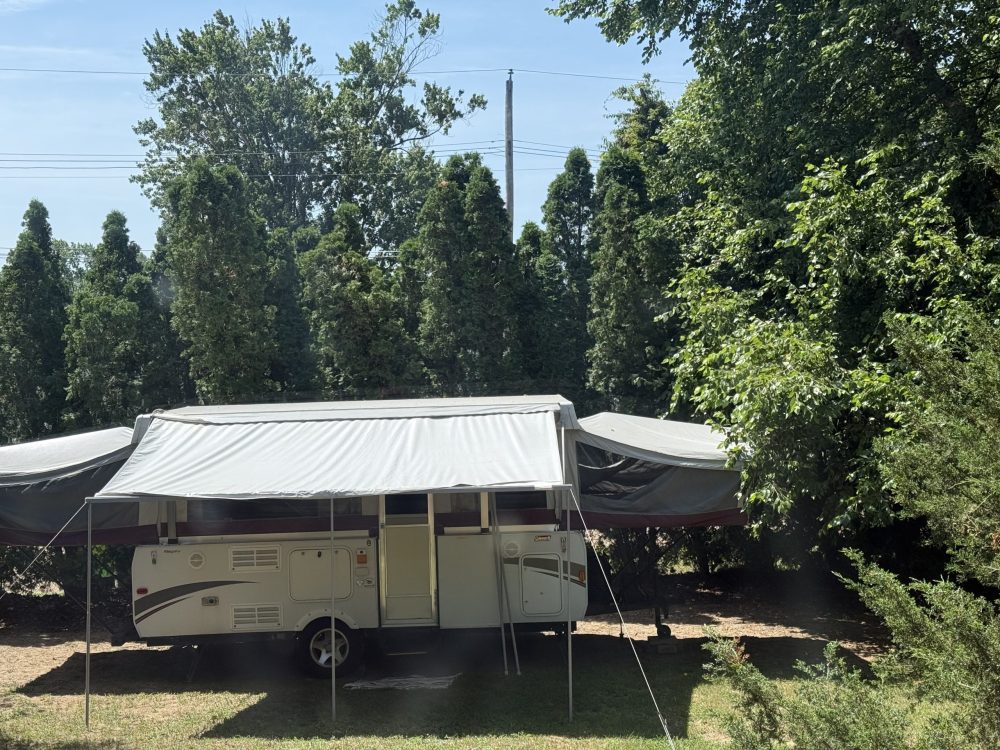
- Crossover vehicle towed my new-to-me popup very well
However, all three of us women slept like crap! Before I go on the next camping trip, I will be looking into improving the comfort of the bed for sure.
According to The Southern Glamper, “Sometimes you just want to be in your own bed. Other times, you want to be camping. And many times, campers complain about the usually uncomfortable RV mattress.
- Replace Your Mattress
In our pop up camper, we have a Classic Brands Memory Foam Replacement Mattress. It is about 4.5 inches thick. I can still close my camper up with no issues.
And if you are still thinking, ‘I’ll just buy a topper instead and save the money.’ Don’t. Get the mattress. 2 and 3-inch toppers are over $100. Our mattress is thicker than a topper and costs almost the same.
- Padding Underneath
Dense memory foam cushions your body against that hard, board underneath. But, anti-fatigue mats under your mattress can take your bedding to the next level.
- Bedding
Get some soft sheets. These don’t have to be expensive,”.
Upon further research, I found that to prevent trapped condensation under the foam mattress, I should consider perforated anti-fatigue rubber drainage mats rather than traditional anti-fatigue mats.
So, I followed this lady’s suggestions and bought anti-fatigue mats to place down first, on the hard plywood in the camper’s pull-out beds. However, I bought anti-fatigue mats with holes to prevent condensation from building up between the wood, the mats, and the memory foam bed.
Furthermore, I ended up going with the three-inch memory foam topper instead of the mattress to avoid any complications in closing down my camper. I already have soft, thick sleeping bags that I will take off before closing it up.
Why does my tent get so much condensation?
While a popup camper does have a hard top, bottom, and lower side walls, the “wings” that pull out for beds and the top side walls are made of canvas. Moisture forms when warm air meets the cold canvas in a popup camper, just as it does in tents. I’m not talking about whether there are holes or leaks; this happens even when everything is in perfect condition.
Camping experts at Alton Goods explain this phenomenon: “Yep, condensation is one of the most common complaints people have about camping.
And rightly so – you expect your shelter to keep you dry, so the idea that it’s getting wet inside just seems wrong.
And while there are methods to reduce condensation, the truth is that in some conditions, it’s unavoidable. It’s not user error or poor shelter design. It’s just a fact of life.
In the most simple terms, condensation is the process of water vapour in the air turning into liquid.
When it comes to tents, tarps and swags, condensation occurs because the air inside the shelter is warmer than the air outside the shelter. Warm air can hold more moisture than cold air, so as the air temperature cools, the excess moisture condenses into water droplets.
The main source of this warm, moist air inside your tent is you. Every breath you take releases water vapour, and your body’s natural heat and perspiration contributes to the temperature difference and higher humidity inside the tent,”.
Condensation is unavoidable, but I have found a few tricks over the years to minimize its effects.
- Open windows during the day
- Close windows around 6:30-7 pm before the night air changes
It’s not a foolproof method, but it helps (sometimes)!
How to back up a camper trailer
A popup camper might have similarities to tents, but you don’t have to tow a tent – you pack it in with your gear. A popup camper must be towed by a vehicle that can handle the weight.
I have towed a small popup and a boat before, but I’ve never had to do the maneuvering or backing up because I had my ex-husband or another friend who knew what to do. With patience and practice, I am doing okay so far.
Here are some pointers I found on the web for backing up a travel trailer:
- Grip the Bottom of the Wheel: Place your hand at the 6 o’clock position. Moving your hand to the left pushes the trailer left; moving it to the right pushes it right.
- Watch the Wheels: Focus your mirrors on the trailer’s tires, not the back of the trailer.
- Use a Spotter: Establish clear, agreed-upon hand signals or use walkie-talkies to communicate.
It turned out to not be as bad as I imagined, and I did well towing the camper with my crossover vehicle and “with a little help from my friends”. However, once we got to our campsite, it took multiple attempts to back it up and a lot of effort to get the camper into the right spot, taking about forty-five minutes in total.
We actually never did get it completely level, as the campsite was very uneven and I was done trying to get it in the right spot. Would not recommend it, but we survived. The camper did not tip over, and all went well besides the uncomfortable beds.
The second trip next month with my sons will be less stressful, as my oldest son is very comfortable towing, maneuvering, and backing up with a trailer. Plus, it will be my second time doing it, so hopefully the nervous jitters will be gone, and my fears will be conquered.
The first trip was only about two to three hours away, and the second trip is about four to five hours away.
*Note: All content within this article is meant for informational purposes only and is in no way a replacement for professional advice or support. Seek immediate and appropriate assistance from a professional when necessary.
Pop up camper bedding
In conclusion, camping comfort comes with trial, error, and preparation—but better bedding, less condensation, and practice towing can make each trip more enjoyable.