Category: Geriatrics

  • Best Walking Shoes for Senior Women

    Best Walking Shoes for Senior Women

    Dating back at least twenty-five years, I started wearing shoes that provided the best support for my aching feet after waiting tables all day. Although I am no longer a server, I still seek out shoes designed for shock absorption, such as running shoes, insole supports, and footwear recommended by podiatrists. Currently, I am wearing New Balance, but I am considering switching to Hoka’s as they are what my older cousin, who is a nurse at an elder care facility in Michigan, wears.

    Furthermore, supportive footwear is essential, especially when standing on hard surfaces like concrete. Shoes with proper arch support and cushioning are making a huge difference for me. Shoes specifically designed for people who stand for long periods are built to reduce pressure on the joints and provide better shock absorption, especially as we age.

    My cousin and I are no longer spring chickens, and from what I can tell, we are not getting any younger!

    In addition to footwear, my doctors have recommended physical therapy sessions, which have helped strengthen the muscles supporting my feet, legs, and lower back, thereby creating a more stable foundation and reducing compensatory movements that have led to pain, most notably in my knees, as well as in those areas. Exercises that focus on stretching and strengthening the hip flexors, quadriceps, hamstrings, and calves also improve overall alignment and reduce joint stress.

    Let’s not forget about ergonomics! I have been using anti-fatigue mats to mitigate some of the harsh impacts of standing on my tile floors in the kitchen and on the concrete floor in my laundry room for years. However, I do not have an outdoor anti-fatigue mat yet, but I will be investing in one as soon as possible.

    The mats do offer a softer surface that reduces the strain on my body, but the pain is still there, just not as intense. In fact, I just ordered some new mats for my kitchen that are supposed to be more durable for my dogs. Their nails have scratched up the current set and are chipping.

    By maintaining an open dialogue with my healthcare providers throughout my injury and pain challenges, the pain management plans have reflected any changes in my conditions as well as incorporated new strategies and treatments as needed. Effective communication about symptoms and treatments will better inform the decisions I make, enhancing the management of chronic pain big time.

    *Note: All content within this article is meant for informational purposes only and is in no way a replacement for professional medical or psychological advice or support. Seek immediate and appropriate care from a healthcare professional should you or a trusted loved one deem it necessary.

    Why does standing on concrete hurt?

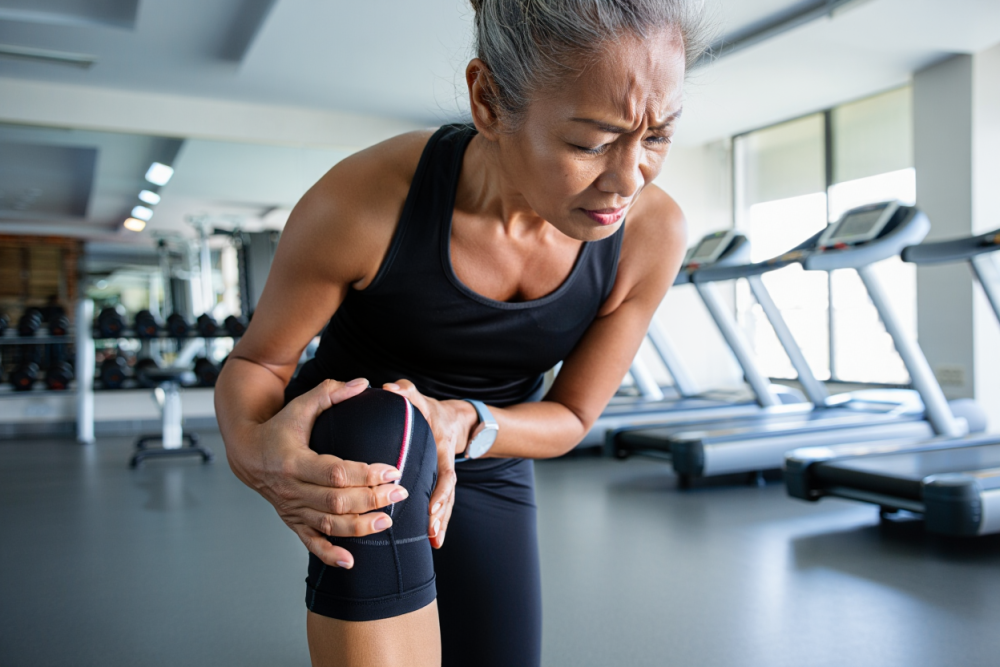
    While standing on concrete and my stone driveway for about thirty-five minutes or so, and after grilling dinner for my family, I can barely walk or stand on my left leg because of intense pain in my hip. There is severe pain in my knee as well. None of this is very odd to me, except that I have had somewhat of a period of respite from five-plus years of chronic pain. Chronic pain that has been, at some point, debilitating in the following areas:                                                 

    • Left shoulder
    • Right shoulder
    • Left hip
    • Lower left back sciatica
    • Lower right back sciatica
    • Torn meniscus on left knee
    • Torn meniscus on the right knee
    • Old neck injury

    The reason why standing on concrete hurts my back, knees, and hips is that, unlike other surfaces, concrete has no give, and its inflexibility affects the body, especially for middle-aged women like me, who often feel as though they have no shock absorbers left when standing on hard surfaces.

    For example, when standing on hard surfaces, I am notably susceptible to backaches, knee pain, swollen legs, and sore feet. Because this specific pain has not been treated yet, I experience a flare-up of old injuries and suffer from chronic pain.

    Some of my best pain relief techniques involve soaking in an Epsom salt bath for at least twenty-five minutes, once a day. It makes a huge difference for me. Throughout all the years I have been in sports recovery, I have employed the following:

    • Chiropractors
    • Orthopedics
    • Physical therapists
    • Acupuncturists
    • Massage therapists
    • Cortisone shots
    • Taking it easy
    • Sports rubs
    • Epsom salt baths

    As you can see, I have tried just about everything short of getting surgery, and unfortunately, it looks like I will end up needing knee surgery after all. But now I am wondering where this recent pain is coming from. Is it coming from my hip, or is it something in my feet? Let’s find out more below.

    Link between feet and back pain

    Because all the treatments and efforts to relieve my chronic pain have not completely eradicated it, I am now wondering if the pain is coming from my feet. Well, I can tell you that every source I have researched said yes, the bunion on my foot can most definitely cause hip, back, and knee pain.

    According to podiatrists at Kew Foot Clinic, “They (bunions) are however more than just a cosmetic problem. They can become a major medical problem for several reasons. The main problem is:

    Having a distorted big toe joint along with this joint becoming rigid in its range of motion changes how a foot pivots through propulsion. When a foot can no longer pivot at this joint it reduces knee and hip flexion causing stress on these joints.

    A bunion deformity can also change the alignment of the knee and hip causing excessive internal or external knee rotation leading to scoliosis of the spine,”.

    My healthcare team told me that if I suspect my feet might be the culprit, it would be wise to consult a podiatrist for a thorough evaluation. Custom orthotics might also be beneficial, as they can provide the support needed to correct your gait and distribute weight more evenly, potentially alleviating some of the strain on my knees, hips, and back.

    Best walking shoes for senior women

    In conclusion, supportive shoes, smart ergonomics, and open communication with healthcare providers can make all the difference—your feet truly are the foundation of whole-body wellness.

  • What does home care provide?

    What is home care?

    After years of pro and semi-pro sports many of our athletes need attitional care. Here is some helpful information.

    Professional services that help make your home lifestyle easier to maintain are called home care services. People opt for home care services for a variety of reasons. They may include a temporary or a permanent medical disability, busier work routines leading to a lack of time for household chores, an aged person requiring personal support with assistance from a home care provider. 

    People often confuse the terms of home health care and home care. Home health care includes medical support services from a licensed healthcare service provider, a professional therapist or a hired professional nurse, which helps people suffering from disease or a disability catered specifically to their daily needs. On the other hand, home care is associated with people who provide assistance and companionship to elderly persons in their homes. Home care can be provided by skilled people who are adequately trained to provide many duties related to medical supervision of the elderly but are not licensed to provide other medical services. For example, a home care services provider can help an older adult with incontinence issues but can not administer medical aid to the subject as in injections or intravenous fluids. 

    Usually, there are three services:

    Personal home care is required by older adults who are too aged to carry out many of their chores. Home care providers can help such people with their everyday tasks, thus helping them adjust to their lives. Such home care is also known as assistive care, senior or companion care. Such home care providers can be hired to help the aged members of the family for the whole day or just a part of the day when there is no one at home to attend to the needs of the aged person. 

    Most of the time, the adults requiring companionship or assistive home care are suffering from chronic disabilities or diseases that do not require specialized medical care, such as administering injections or intravenous fluids. These chronic disabilities do not hamper a young person from carrying out the daily tasks completely, but managing the daily chores with these diseases might become a challenge for older adults. For example, older adults with incontinence and are unable to walk properly require proper assistive care from either a family member or another person to carry out these tasks. In this case, having a properly trained home care provider can help the adult enjoy a better lifestyle by dispensing these services when required.

    Such home care providers are trained to dispense basic medical services to their clients. For example, home care providers can help an older adult follow his or her daily medication as prescribed by the physician. Personal home care providers can help their clients with the basics of lifestyle such as bathing, dressing and laundry. If disabled, care providers can also help the person use the toilet properly. Apart from these essential services, home care providers also act as a companion for the older adults during times when no family members are at home, which helps the older adults feel less lonely and unattended. They act as a partner in hobbies and as a person to talk to over the coffee in the evening when no one is there!

    Most home care providers work at particular hours; however, if required, a home care provider can provide live-in care for a person. The care plan is managed by the family members or by the services provider to adjust the schedules to provide the best care possible to the client. nursing care and

    health care:

    Care providers specializing in dispensing complex medical care services to the clients fall in this category. A person may require short term medical care if suffering from temporary illness or an injury or may require long-term supportive care in the case of severe chronic diseases or permanent disabilities. A nursing and health care services provider can provide services to such people as directed by the physicians. Hiring a specialized nursing care provider for giving medical care becomes necessary if the patient requires particular medical services. Such services require medical training and can not be carried out by an inexperienced person. 

    Short term home health care is required by persons with temporary disabilities due to an accident or an injury or bedridden at home after a surgical procedure. Such people usually have to observe a tight medical care schedule, where they require intravenous fluids, administration of injections at suitable intervals and/or require ventilator care if they are in a state of coma. A home health care provider can provide all these services because of skilled and professional experience in this regard. Such home care providers also look after the medication schedules of the individuals and provide physician-prescribed home care during the recovery period after an injury or a surgical procedure. These services are sometimes called “visiting nurse services”, as the care providers most often work at particular hours without providing live-in 24-hour care to patients. However, in severe cases, live-in nursing care providers can also be hired to provide complex medical assistance to the patient, such as ventilator care or dialysis for a short term, until the patient recovers from the severe illness. 

    Long-term supportive health and nursing care are usually required for persons suffering from extreme illnesses such as cancers or severe permanent disabilities. Such home care is also known as catastrophic care. People requiring such nursing services may require specialized medical services such as needing a ventilator or a dialysis machine to perform essential body functions. In this case, hiring a good nurse with adequate experience in dispensing these services in a hospital or somewhere else can be beneficial because they are professionally trained and skilled to administer medical care that can be too complex for the family members, such as tracheostomy tube care, feeding and urinary tube insertion and removal. Patients who are severely disabled due to spinal injuries or brain injuries and are in a coma often require such services from an experienced home nursing provider.